Digital Skills & Leadership: The Twin Pillars of Modern Capacity Building

Digital Skills & Leadership: The Twin Pillars of Modern Capacity Building

CAPACITY BUILDING
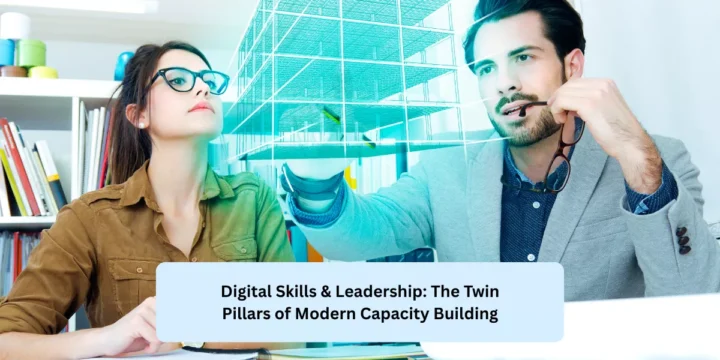
In today’s fast-changing world, success no longer depends only on academic degrees or experience—it depends on how well individuals and organizations adapt to the digital revolution. From remote collaboration to artificial intelligence-driven decisions, the global economy is now defined by technology and leadership agility. Digital skills empower professionals to navigate this complex environment, while leadership ensures vision, strategy, and innovation remain at the forefront. Together, they form the twin pillars of modern capacity building, driving progress, resilience, and growth. This article explores how mastering these two competencies can future-proof individuals and institutions, bridging the gap between technology and human potential in the 21st century. The Evolving Definition of Capacity Building Traditionally, capacity building meant strengthening skills, resources, and structures within organizations to enhance performance. In the past, it often focused…
Read More
Financial Management Training for Nonprofit Organizations

Financial Management Training for Nonprofit Organizations

CAPACITY BUILDING
Financial management is a critical skill for nonprofit organizations whose missions depend on effective resource utilization and fundraising success. Training in financial management equips nonprofit leaders, staff, and board members with the tools needed to maintain fiscal health, transparency, and long-term sustainability. Unlike for-profit entities, nonprofits face unique financial challenges requiring specialized knowledge of budgeting, compliance, reporting, and financial strategy. Without this expertise, nonprofits risk inefficiencies, misallocation of funds, or jeopardizing donor trust. This article explores the importance of financial management training tailored specifically for nonprofit organizations. It delves into key training areas such as budgeting, financial reporting, compliance with regulations, and strategic financial planning. By understanding these components, nonprofits can enhance their operational effectiveness and maximize the impact of their programs. Comprehensive training empowers nonprofits to adapt to changing…
Read More
Developing Human Capital for Long-Term Growth

Developing Human Capital for Long-Term Growth

CAPACITY BUILDING
Developing human capital is a fundamental component for achieving sustainable and long-term economic growth. Human capital, encompassing the skills, knowledge, health, and abilities of individuals, significantly influences productivity and innovation within an economy. The emphasis on education, training, and workforce development directly correlates with improved economic outcomes, increased competitiveness, and higher standards of living. Countries that invest wisely in their people often experience transformative growth by fostering a workforce capable of adapting to technological changes and evolving market demands. Moreover, developing human capital is not solely about economic advantages; it also promotes social cohesion and reduces inequality by providing opportunities for all individuals to reach their potential. This comprehensive and forward-thinking approach ensures a resilient labor market, enabling economies to navigate global challenges more effectively. Understanding the multifaceted nature of…
Read More
The Role of Technology in Capacity Development

The Role of Technology in Capacity Development

REGIONAL COOPERATION
In today’s rapidly evolving digital era, technology plays a transformative role in capacity development across various sectors. Capacity development, which involves enhancing the skills, competencies, and abilities of individuals or organizations, is increasingly driven by technological advancements that enable greater access to knowledge and resources. With the integration of digital tools, learning platforms, and communication technologies, organizations are better equipped to nurture talent and improve performance on a global scale. Technology bridges gaps between geographical locations, making knowledge dissemination faster and more efficient. It supports continuous learning, collaboration, and innovation, critical components for sustainable development. By leveraging technology, individuals and organizations can efficiently manage resources, measure progress, and adapt strategies in real-time. This article explores how technology is instrumental in accelerating capacity development, the benefits it offers, and the challenges…
Read More
Community-Based Capacity Building Approaches

Community-Based Capacity Building Approaches

PUBLIC HEALTH
Community-based capacity building approaches represent a transformative methodology centered around empowering local populations to enhance their own skills, knowledge, and resources. This model emphasizes collaborative efforts where communities become active participants rather than passive recipients of aid or development programs. The core objective is to foster self-reliance and sustainability by harnessing local strengths and addressing specific needs through inclusive and context-specific strategies. Capacity building is not a one-size-fits-all solution; it requires tailored interventions that reflect the unique social, economic, and cultural realities of each community. These approaches often integrate educational initiatives, resource mobilization, leadership development, and institutional strengthening to promote holistic growth. By focusing on grassroots participation, community-based capacity building ensures programs are relevant, culturally sensitive, and more effective in the long term. This article explores various components, benefits, challenges,…
Read More
Building Leadership Skills in Emerging Economies

Building Leadership Skills in Emerging Economies

CAPACITY BUILDING
Building leadership skills in emerging economies plays a pivotal role in driving sustainable development and fostering economic growth. Emerging economies often encounter unique challenges such as infrastructure deficits, limited access to technology, and uneven educational opportunities, which makes effective leadership crucial for navigating these landscapes. Developing strong leadership capabilities helps tackle these obstacles by inspiring innovation, enhancing managerial effectiveness, and encouraging collaborative efforts within communities and organizations. Investing in leadership development programs tailored specifically for emerging markets allows local leaders to harness their potential, creating a ripple effect that benefits sectors ranging from business and politics to education and social entrepreneurship. Engaged leaders equipped with the right skills can successfully mobilize resources, make informed decisions, and advocate for policies that promote equality and progress. This article delves into the essential…
Read More
Monitoring and Evaluation in Capacity Building Projects

Monitoring and Evaluation in Capacity Building Projects

REGIONAL COOPERATION
Monitoring and evaluation (M&E) are critical components within capacity building projects, serving to ensure that objectives are effectively met and resources are optimally utilized. Capacity building projects aim to enhance the abilities, skills, and expertise of individuals, organizations, or communities, making them more efficient and sustainable. The process of M&E provides stakeholders with vital data and insights that guide decision-making, improve project design, and increase accountability. By continuously tracking progress and assessing outcomes, M&E helps identify both strengths and areas needing improvement, fostering adaptive management. In capacity building, where transformations often involve complex social and institutional changes, rigorous M&E frameworks are indispensable for measuring intangible results such as knowledge retention, behavioral change, and institutional capacity. This article explores the integral functions, strategies, and challenges of monitoring and evaluation in capacity…
Read More
Public-Private Partnerships in Skill Development

Public-Private Partnerships in Skill Development

PUBLIC HEALTH
Public-Private Partnerships (PPPs) in skill development represent a transformative approach to bridging the gap between education and employment. As global economies become increasingly complex and competitive, the demand for a skilled workforce that meets industry standards has surged. Governments and private sector entities are joining forces to create innovative, sustainable, and effective training programs that align with market needs. These partnerships leverage the strengths of both sectors: the regulatory and funding capabilities of the government, and the industry expertise, technology, and agility of private companies. This collaboration aims not only to enhance employability but also to drive economic growth, reduce unemployment, and promote inclusive development. By combining resources, knowledge, and networks, public-private partnerships ensure that skill development initiatives address real-world challenges and equip individuals with relevant, up-to-date competencies. Ultimately, such…
Read More
Training Programs That Empower Public Sector Professionals

Training Programs That Empower Public Sector Professionals

CAPACITY BUILDING
Training programs that empower public sector professionals are essential in developing effective governance and improving community services worldwide. Public sector organizations face unique challenges such as budgeting constraints, compliance with regulations, and delivering equitable services to diverse populations. These training programs equip employees with vital skills, from leadership and technical expertise to communication and project management. By enhancing the capabilities of public servants, training acts as a catalyst for innovation, efficiency, and transparency in government operations. Moreover, these developmental initiatives foster a culture of continuous learning, adaptability, and accountability. Organizations investing in such education not only improve the quality of public service but also boost employee satisfaction and retention. The evolving nature of public administration demands an ongoing commitment to professional growth for public sector workers. Ultimately, well-structured training programs…
Read More
Strengthening Institutional Capacity for Sustainable Development

Strengthening Institutional Capacity for Sustainable Development

CAPACITY BUILDING
Strengthening institutional capacity for sustainable development is a fundamental requirement to address the complex challenges faced by societies around the world. Institutions, whether governmental, non-governmental, or private sector, play a critical role in shaping policies, implementing programs, and ensuring long-term environmental, social, and economic stability. Enhancing their capacity means improving systems, skills, resources, and governance mechanisms that allow these entities to effectively respond to evolving sustainability needs. The convergence of issues such as climate change, population growth, resource depletion, and social inequality necessitates robust and adaptable institutions capable of integrating sustainable development principles into all aspects of decision-making. This article explores various dimensions of institutional capacity strengthening, emphasizing the importance of human capital development, technological innovation, financial sustainability, participatory governance, and policy coherence. It aims to highlight strategies and best…
Read More